Japan Has 33,000 Companies Over 100 Years Old. Most of Them Are Small.
Normal advice: grow big so you're safe. Weird advice: build small and unbreakable.
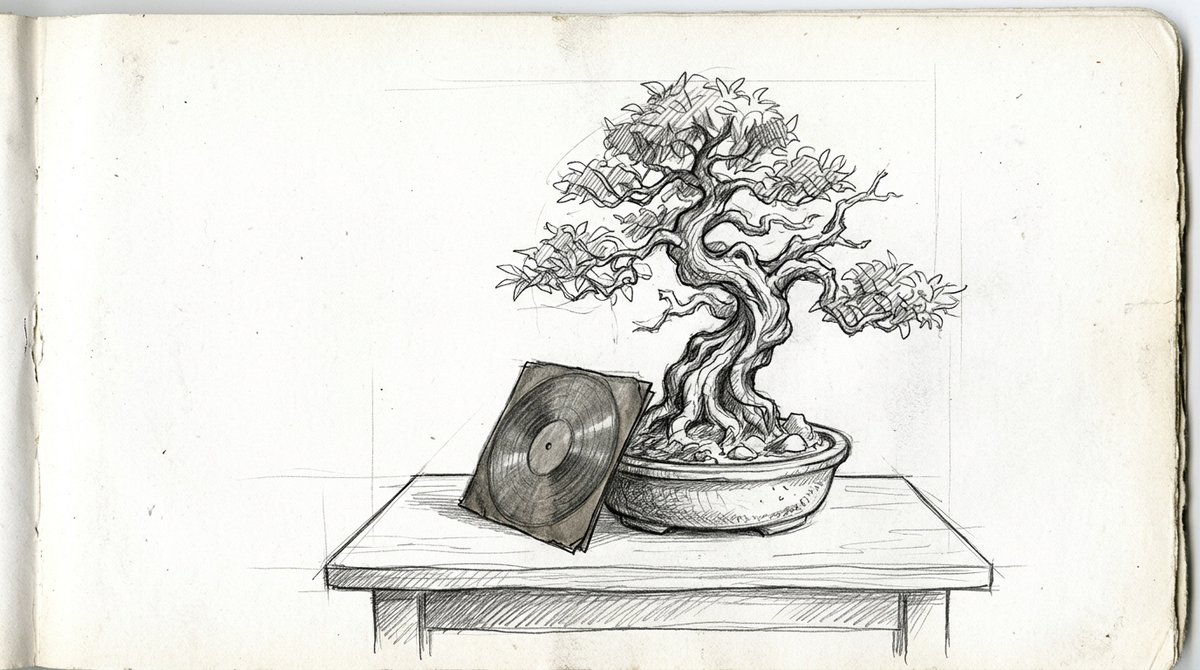
Normal advice: grow big so you're safe.
Weird advice: build small and unbreakable.

Japan is home to the oldest companies on earth. In 2019, there were over 33,000 businesses in Japan over a century old, according to Teikoku Data Bank. They survived earthquakes, wars and two lost decades.
You'd expect them to be giants. They aren't. Over 70% of centennial companies generate less than $5 million in annual revenue.
Sake brewers. Inns. Sweet shops. Small companies that refused to die.
We're told size is safety. Japan's oldest companies say the opposite: what survives isn't the biggest. It's the most solid.
That's what this blog is about.
A big business, at micro size
"Enterprise" sounds big. Headquarters, a board, an org chart.
A microenterprise is exactly that, at micro size. It has the discipline of a big company: a clear product, a defined customer, documented work and numbers someone actually reads. It just runs with one person, or a handful.
It's not a side gig. It's not a job you own. It's a company. A small one, built like a big one.
I've run a technical company since 2012. Along the way I learned what most business books skip: having a lot of employees is a different game. Not a bigger version of a small business. Another sport, with other rules. My love for technology pushed me the other way. Year after year, tools let me do more with fewer people. I got efficient not by hiring, but by building systems.
That's the kind of company I care about.
A few giants, or millions of owners
Here's the uncomfortable number.
In Mexico, mipymes are 99.8% of all businesses but generate about 45% of value added. Large companies, just 0.2% of businesses, generate 55%. Go further up: the 1,000 biggest companies produce 56% of the country's gross output, and their value added per worker is 5.3 times higher than everyone else's.
In the US, small businesses produce 43.5 percent of GDP. Less than half.
Walk into any supermarket and you see where this goes. Ten companies control almost every food and beverage brand on the shelves: Nestlé, PepsiCo, Coca-Cola, Unilever, Danone, General Mills, Kellogg's, Mars, Associated British Foods and Mondelez. Back in 2010, Nestlé's revenue was larger than the GDP of Guatemala.
Hundreds of brands. A handful of owners.
Most people think this is fine. Efficient, even. I don't.
When a few companies hold everything, the economy depends on a few boardrooms. When millions of owners hold it, no single failure takes everyone down. That's not just my opinion. Researchers at Penn State studied 2,953 US counties and found that places with more small, locally owned businesses had faster income growth, while large companies owned from outside had a negative effect. A Federal Reserve Bank of Atlanta study found the same pattern: the more people employed by microbusinesses, the more income growth and the less poverty.
Giants create jobs. Small owners create prosperity that stays where it's made.
What Japan got right
Japan never handed everything to the giants. In manufacturing, its SMEs produce more than 50% of value added.
Toyota is the proof. The carmaker didn't build everything itself. It subcontracted component development and production to a small group of Tier-1 suppliers, who relied on Tier-2 suppliers, and so on down the chain. The car at the top was only as good as the small shops at the bottom.
In Tokyo's Ota ward, about 80% of the roughly 3,500 small factories have nine employees or fewer. They're known for high precision and fast delivery, built on neighbors working with neighbors.
When times got hard, Ota went from a peak of 9,177 factories in 1983 to 3,584 today. The ones that survived did it by developing their own products and refining their own technologies.
Being small wasn't the problem. Being dependent was.
Why now
The giants have one real advantage: productivity. More output per person. That's the 5.3x gap in Mexico.
For decades, closing that gap meant capital, machines and payroll. Now a lot of it is software.
Nasdaq's analysis of Census data found one-person business applications up more than 20% since early 2025, while applications from firms likely to hire stayed flat. Nearly half of that solo growth came from high AI-adoption industries. In a FreshBooks survey, 86% of solopreneurs try AI before hiring human help, and 90% say AI makes it easier for one person to start and run a business.
I believe we're about to see more one-person companies than at any time in history. For the first time, a company of one can work with the productivity of a company of fifty.
That's great news. It's also a warning.
AI gives one person the output of a team. It doesn't give them the discipline of a company. You can generate a logo, a website and fifty social posts before lunch and still have no idea whether you're making money.
More solo companies means more fragile solo companies. Unless they're built to be unbreakable.
What actually breaks a small company
I've watched a lot of small businesses break. Rarely because of a competitor. Almost always from the inside.
No numbers. No data, no KPIs. The owner runs on gut feel and finds out about the problem when the bank account does.
No focus. Ten products, five customer types, three side projects. Everything matters, so nothing does.
No money. Revenue isn't profit. Plenty of businesses are busy and broke at the same time.
Wrong priorities. The day goes to what's urgent, never to what's important. Months pass. Nothing compounds.
None of these get fixed by working harder. They get fixed by structure.
The Unbreakable Microenterprise
This is the framework I've been building for years. I'll go deep on it in future posts. Today I'm just planting the seed.
An unbreakable microenterprise runs on four engines:
Product. Why the business exists, why a customer picks you over every alternative, and whether you make real margin by design, not by accident.
Customer. Who exactly you serve, what you say to them, and a repeatable way to bring them in, close them and keep them.
Work. The one function that, if it stopped, everything would collapse. Every process, tool and person exists to protect it.
Numbers. Margins, cash, cost to acquire a customer, retention and a few goals you actually check.
If one engine fails, the business limps. If two fail, it breaks. When all four run, a company of one can outlast companies of hundreds.
Why I'm doing this
In 1995, the Mexican writer Gabriel Zaid published a small book with a title that stuck with me: Hacen falta empresarios creadores de empresarios. We need business owners who create business owners.
Not bosses. Business owners who help other people build their own companies.
That became my motive. My mission is simple: help small businesses become unbreakable.
That's what Weirdxican will do from now on. Ideas, interviews with founders who did something weird that worked, and piece by piece, the Unbreakable Microenterprise, one engine at a time.
Here's how I'd test it this week
I'd take a blank page and write four headings: Product, Customer, Work, Numbers.
Under each one, I'd write the biggest weakness in my business. One line each. No excuses.
Then I'd circle the weakest engine. That's where the next break will come from. That's where I'd spend next week.
If you want help finding your weakest engine, write me at hola@weirdxican.com.